Sacred Symbols and Traditions
Exploring the spiritual significance of Meher Baba's flag, emblem, and sacred fire ceremony
Jump to Section
Arti
A Cry of the Yearning Heart

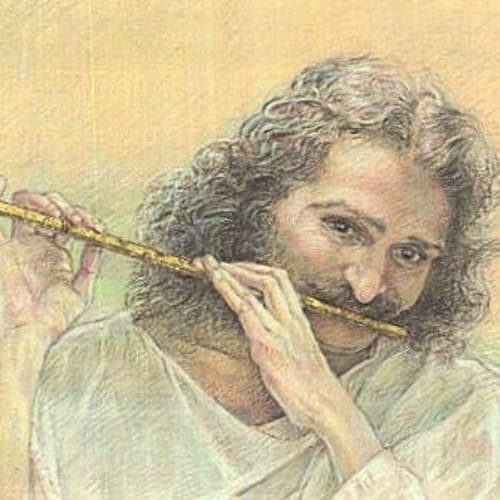
Painting of Avatar Meher Baba
"Baba told Roshan Kerawala that the Bujaawe Arti was the most potent of all the prayers in this Advent and He said He would be present wherever and whenever this prayer is sung."
— Meher Baba
Arti is a devotional song or prayer with refrain expressing yearning for and offering oneself to the one worshipped. Traditionally, it concludes worship with lighted lamps or incense waved before the person being worshipped. Three main artis are sung in honor of Meher Baba: the Gujarati Arti composed by Baba himself, the Australian Arti by Francis Brabazon, and the American Arti by Henry Mindlin.
Timeline
Meher Baba composed the Bujaawe Naar (Gujarati Arti) on January 11, 1926. Based on Bhairavi Raga, it is the most potent of all prayers in this Advent. Baba stayed awake one night listening to singing in the street and composed this arti, singing it for the women in the morning.
Francis Brabazon composed 'O Glorious Eternal Ancient One' for the East-West Gathering. When Meher Baba heard it, He proclaimed 'This is the first English Arti' and called it 'a true Western Arti.'
Twenty-nine songs were sung to Meher Baba at Meherazad in batches of four until Baba approved each one for The East-West Gathering book. The Australian Arti was one of the 29 songs approved.
Henry (Hank) Mindlin composed the American Arti under Murshida Ivy Duce's direction, based on Adi K. Irani's English translation of Madhusudan Pund's Hindi arti 'Jaha Kalpana'. It was the second Arti composed in English.
Meher Baba personally reviewed and approved the American Arti in 1968.
The American Arti premiered in April 1969 at Guruprasad during the 'Great Darshan.'
Arti
Gujarati Arti (Bujaawe Naar)
Gujarati
Composer
Meher Baba
Established
January 11, 1926
Musical Basis
Bhairavi Raga
Most potent of all prayers in this Advent. Baba told Roshan Kerawala He would be present wherever and whenever this prayer is sung.
Australian Arti
English
Composer
Francis Brabazon
February 1954, Andhra, India (MN Collection)
Established
1962
Approved
Meher Baba (1963) - Meherazad
First Arti composed in English for Western lovers. When Meher Baba heard this song, He proclaimed 'This is the first English Arti' and called it 'a true Western Arti.'
American Arti
English
Composer
Henry (Hank) Mindlin
1969, Guruprasad, Pune, India
Established
1967
Approved
Meher Baba (1968)
Second Arti composed in English, personally reviewed and approved by Meher Baba in 1968. Premiered April 1969 at Guruprasad 'Great Darshan.'
Baba's Words
"The Bujaawe Arti is the most potent of all the prayers in this Advent. I will be present wherever and whenever this prayer is sung."
— Meher Baba to Roshan Kerawala
"This is the first English Arti."
— Meher Baba on Australian Arti
Gallery

Painting of Avatar Meher Baba

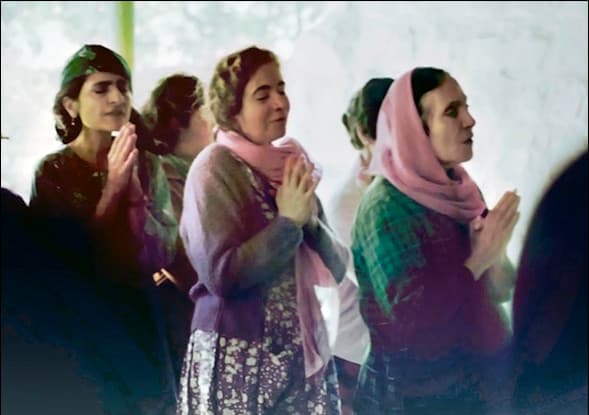
Mandali Singing Gujarati Arti

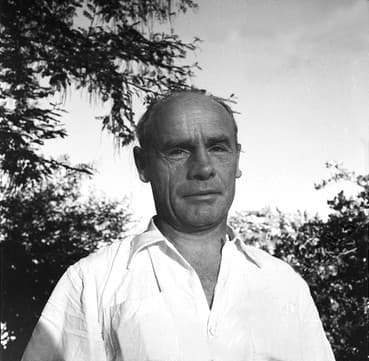
Francis Brabazon (Australian Arti Composer) - Feb. 1954, Andhra India (Courtesy of MN Collection)

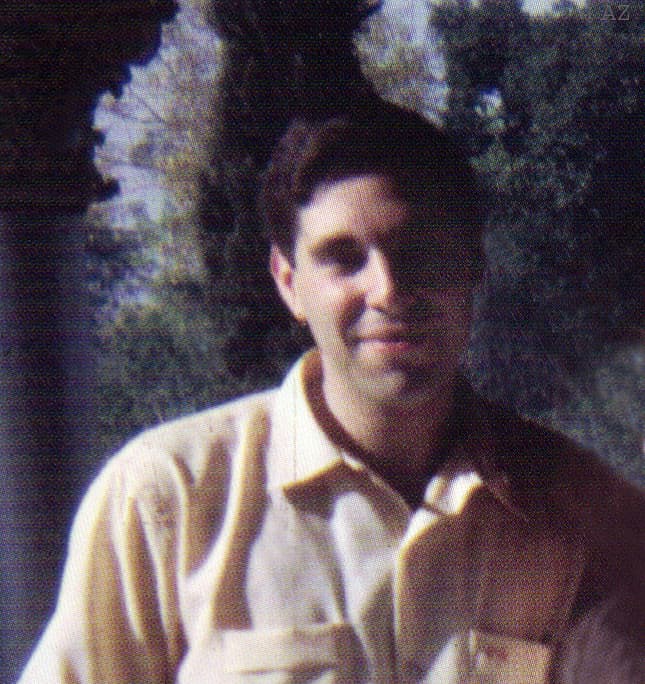
Henry Mindlin (American Arti Composer) - 1969, Guruprasad, Poona, India

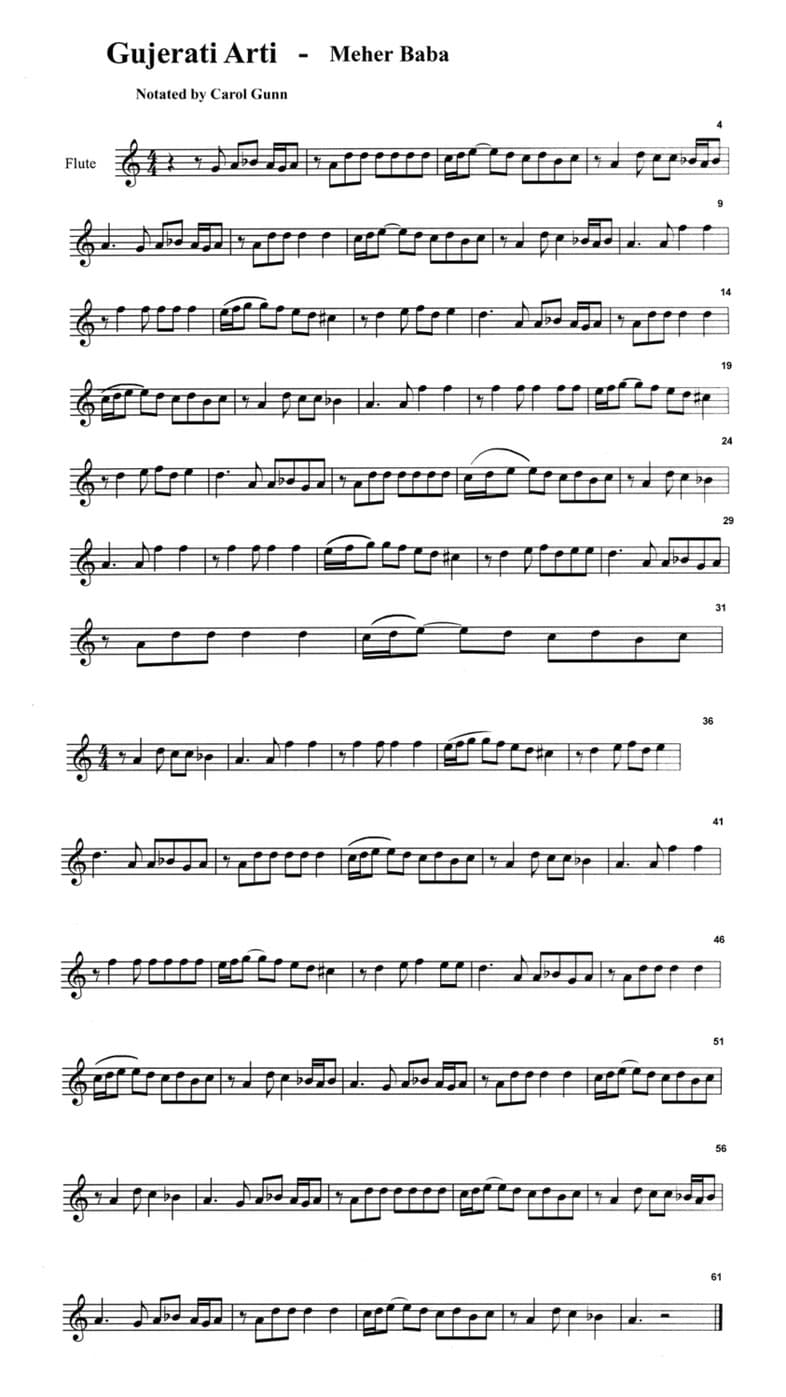
Gujarati Arti Sheet Music

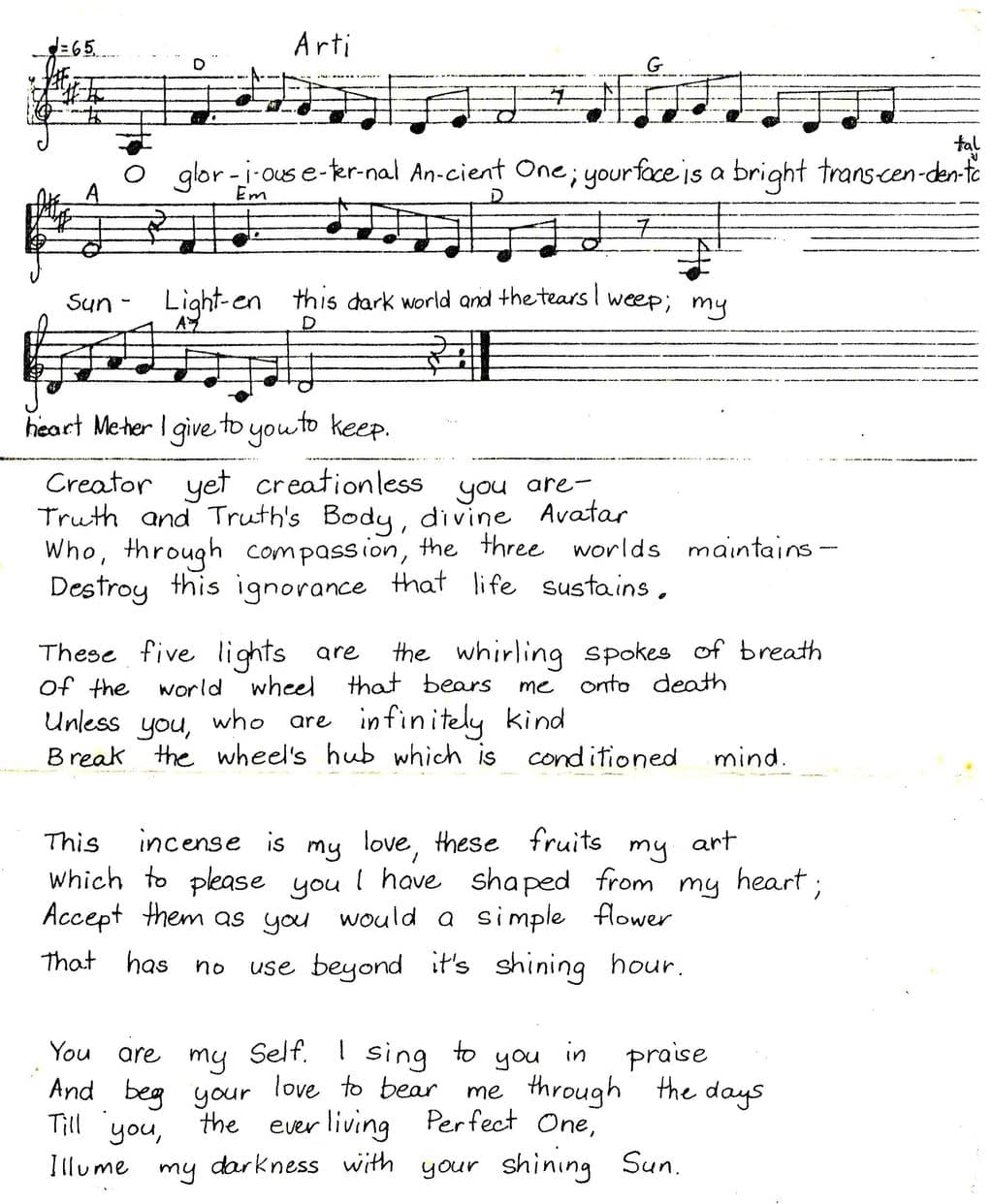
Australian Arti - O Glorious Eternal Ancient One

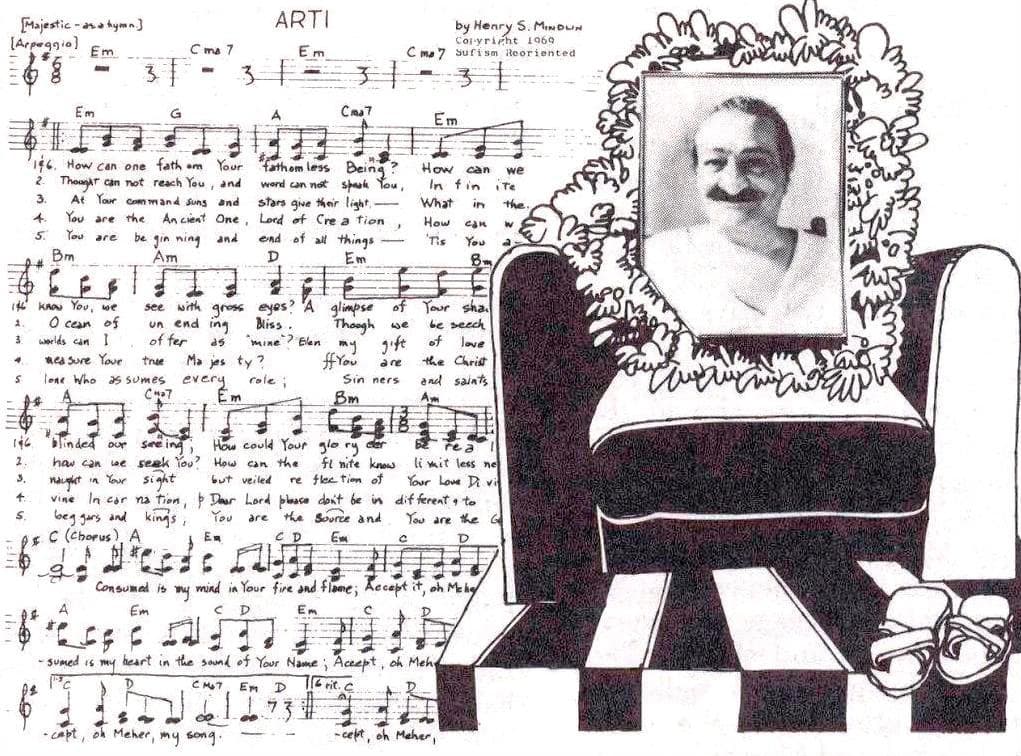
American Arti - How Can One Fathom
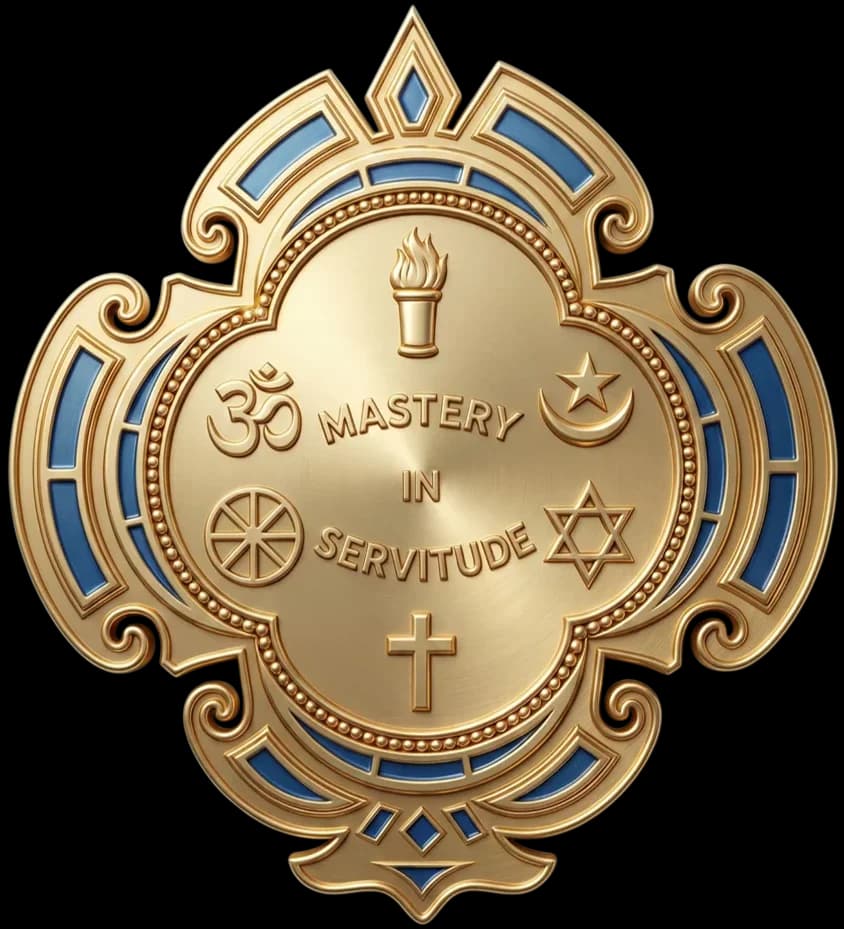
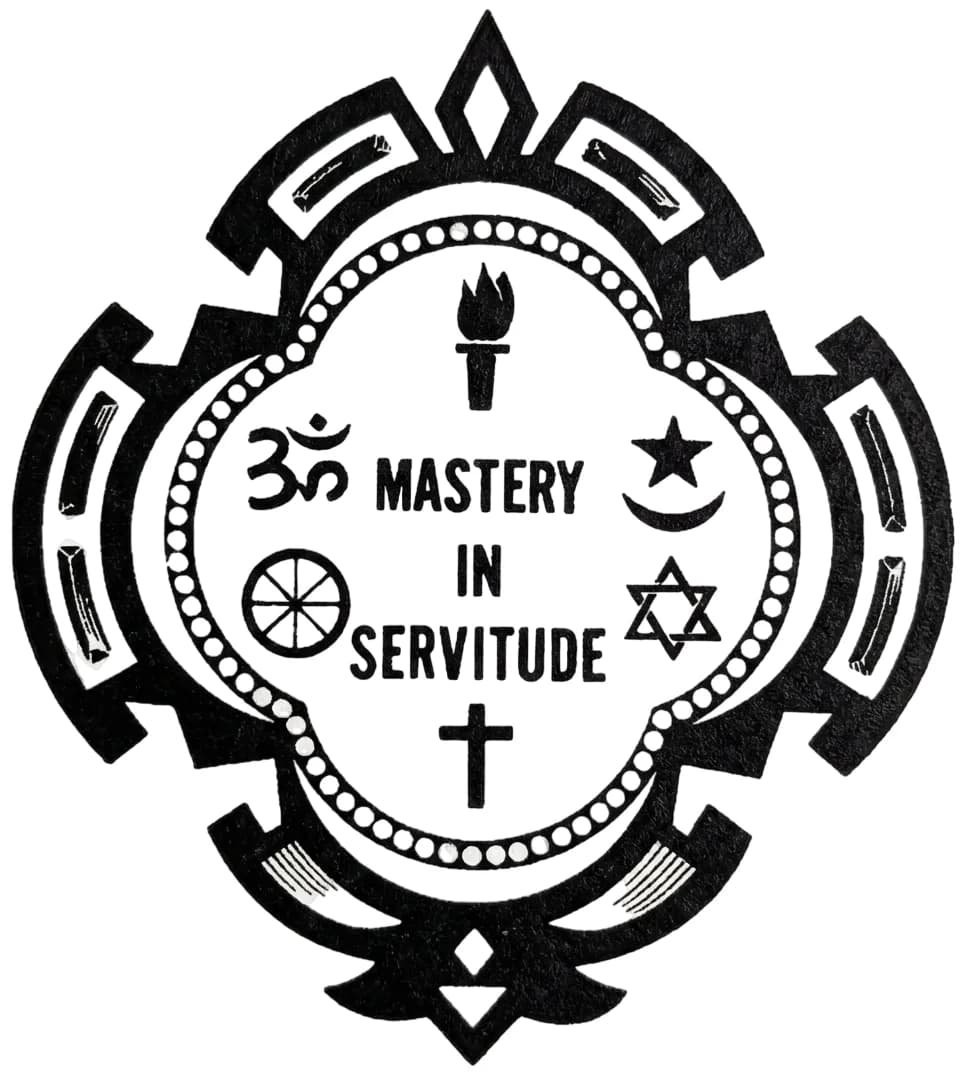
Mastery in Servitude Emblem
Unity of All Religions

Mastery in Servitude Emblem
"Mastery in Servitude"
Mastery in Servitude summarizes the concept of demonstrating Mastery (God-Realization) in the art of being a slave—a slave of the Master, of God and of humanity in general.
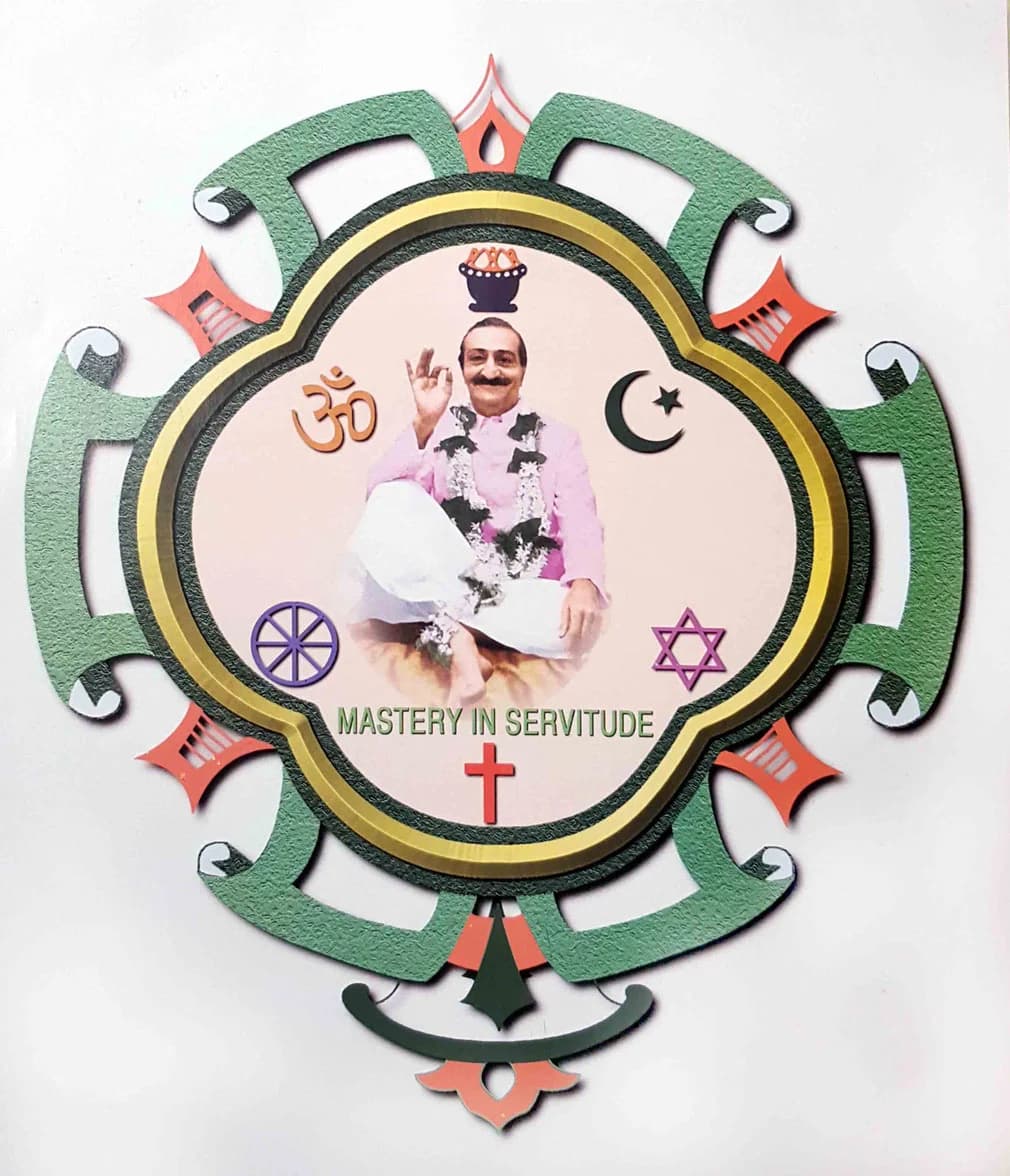
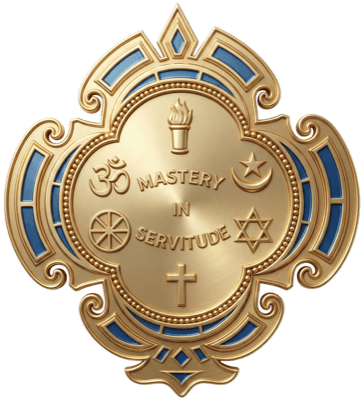
The 'Mastery in Servitude' emblem features symbols from six major world religions arranged around a central heart. Established in February 1923 at Manzil-e-Meem in Bombay, this motto encapsulates Meher Baba's teaching about achieving spiritual mastery through selfless service.
Established
1923-02
Location
Manzil-e-Meem, Dadar, Bombay
Timeline
During a Gutta meeting at Manzil-e-Meem, Meher Baba proposed 'Mastery in Servitude' after various suggestions were rejected. It was adopted as the official motto.
The motto was inscribed above Meher Baba's tomb-shrine (Samadhi) at Meherabad.
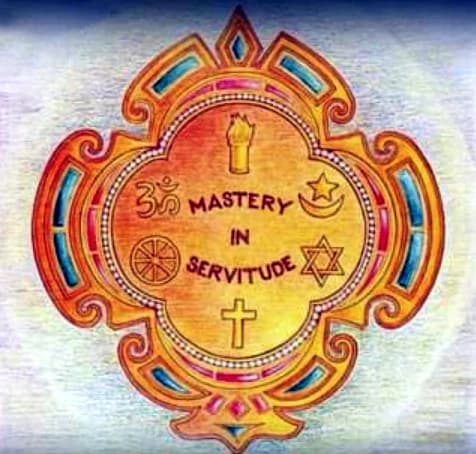
Rano Gayley created a watercolor of the emblem for Adi Irani Jr.
Six Religious Symbols
Zoroastrianism
Purity, Truth, Divine Light
Islam
Progress, Knowledge, Enlightenment
Judaism
Union of God and Humanity
Hinduism
Primordial Sound, Ultimate Reality
Buddhism
Path to Enlightenment
Christianity
Sacrifice, Love, Salvation
The Central Heart
At the center of all six religious symbols is a heart, representing Divine Love, the Unity of All Religions, and the Heart as the Seat of God.
Baba's Words
"When you serve anyone in the form of my sandals, you serve the whole world, and you know not."
— Meher Baba
"I have not come to establish any cult, society or organization; nor even to establish a new religion. The religion that I shall give teaches the Knowledge of the One behind the many."
— Meher Baba
Gallery

Mastery in Servitude Emblem

Emblem with Six Religious Symbols

Mastery in Servitude Design

Emblem Artwork
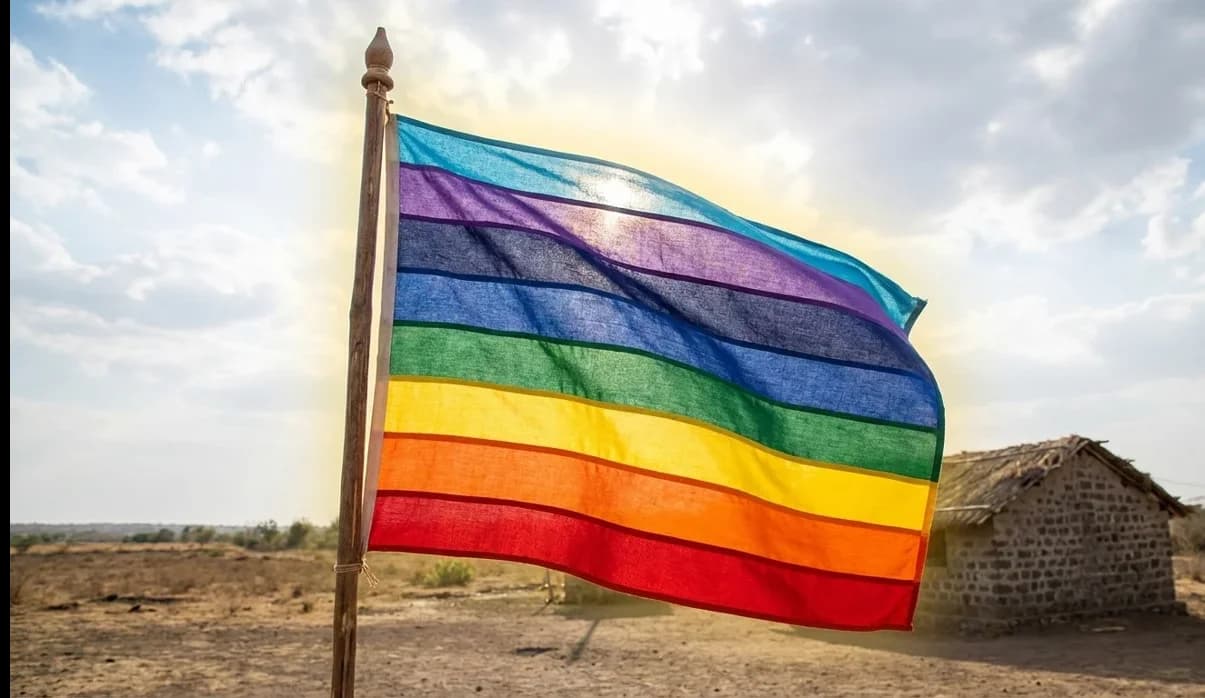
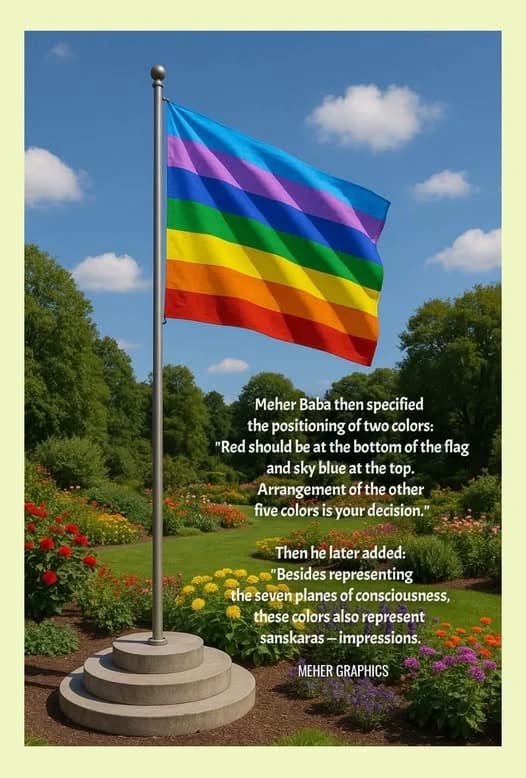
Meher Baba's Seven-Colored Flag
Symbol of Spiritual Evolution and Unity of Religions

Meher Baba's Seven-Colored Flag
"Red should be at the bottom of the flag and sky blue at the top. Arrangement of the other five colors is your decision."
— Lord Meher
The seven-colored flag was established on April 23, 1924, at Meherabad, India. When religious communities disagreed about which color to use—Hindus wanted red, Muslims wanted green, and Parsis objected to both—Meher Baba proposed a flag of seven colors, representing the seven planes of consciousness and the spiritual journey from material existence to God-Realization.
Established
1924-04-23
Location
Meherabad, India
Timeline
Meher Baba proposed the seven-colored flag to resolve religious disputes about flag colors. Naval Talati sewed the first flag and hoisted it near Baba's Jhopdi that evening.
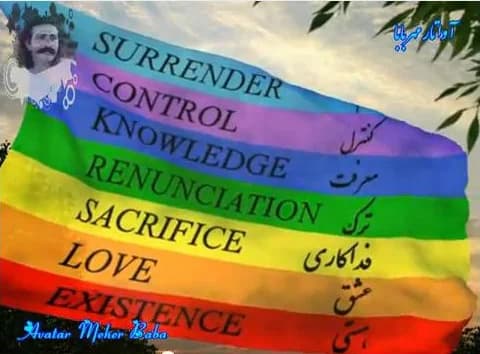
The Seven Colors
SURRENDER
Complete surrender to God, oneness with the Divine
7th Plane - God-Realization
CONTROL
Complete control of mind, senses, and desires
6th Plane - Mental Sphere
KNOWLEDGE
Spiritual knowledge, direct knowing of Truth
5th Plane - Mental Sphere
RENUNCIATION
Renunciation of worldly attachments and desires
4th Plane - Threshold
SACRIFICE
Self-sacrifice, unconditional devotion
3rd Plane - Subtle Sphere
LOVE
Divine love, pure devotion
2nd Plane - Subtle Sphere
EXISTENCE
Material existence, physical life, lust and anger
1st Plane - Subtle Sphere
Baba's Words
"Red should be at the bottom of the flag and sky blue at the top. Arrangement of the other five colors is your decision."
— Lord Meher
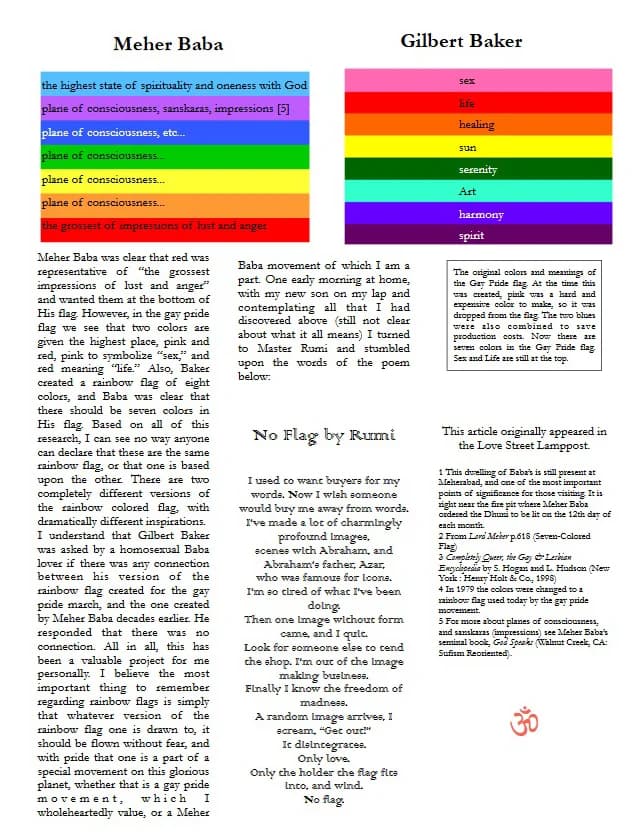
"The colors in the flag signify man's rise from the grossest of impressions of lust and anger—symbolized by red—to the culmination in the highest state of spirituality and oneness with God, symbolized by sky blue."
— Lord Meher
Gallery

Meher Baba's Seven-Colored Flag

Historical Photo of the Flag

The Seven Colors Representing Spiritual Evolution

Flag Comparison
Dhuni Day
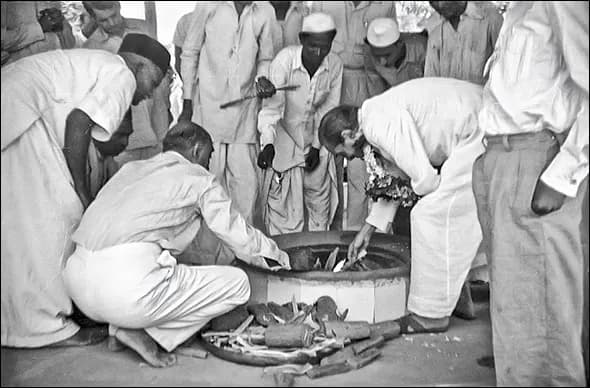
Sacred Fire Ceremony

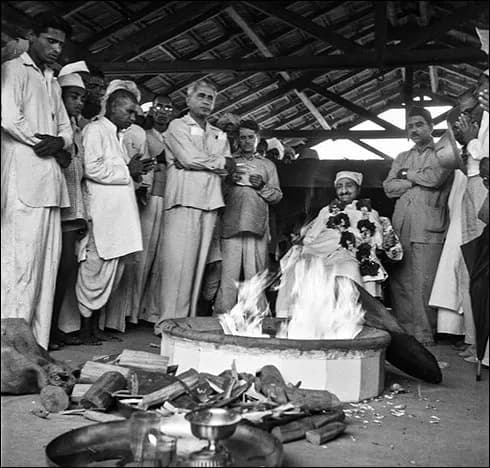
Baba lighting the Dhuni on 24 September 1954. (Photo courtesy of MN Publications)
"The fire is symbolic of divine love and the wood represents the lower self which is to be burned in that fire."
— Meher Baba
Dhuni means 'fire' in Hindi/Marathi. The first Dhuni at Meherabad was lit on November 10, 1925, when farmers came seeking relief from drought, and miraculously, rain fell for 15 hours. The monthly practice of lighting the Dhuni on the 12th began on December 12, 1941, and was formalized in honor of Upasni Maharaj on January 12, 1942.
First Lit
1925-11-10
Monthly on the 12th
Since 1941
Timeline
Farmers from nearby villages came to Baba during a severe drought. Baba ordered the Dhuni to be lit at 11 PM. During the Arti honoring Upasni Maharaj, rain began to fall and continued for 15 hours, filling all wells.
During World War II (5 days after Pearl Harbor), Baba began a week-long water fast and started the monthly Dhuni practice. At 6:45 PM, Baba descended Meherabad Hill covered in a white sheet. Gustadji kindled the dhuni without ceremony.
Upasni Maharaj, Meher Baba's principal spiritual teacher, dropped his body.
Baba allowed five mandali to be present and had Papa Jessawala light the Dhuni in honor of Upasni Maharaj. From this day, Baba ordered the Dhuni be lit on the 12th of every month.
In memory of Upasni Maharaj, Baba instructed all mandali and his lovers everywhere to fast completely.
During the Sahavas from September 24 to October 7, 1954, Baba lit the Dhuni on the first and last day. On September 24, Baba announced it was an anniversary of lighting the Dhuni many years ago.
During the Sahavas at Meherabad in November 1955, Baba gave his famous message: 'Burn your desires and thoughts in the dhuni today. At least let one thought of either lust, greed or anger be burnt in it.'
The Ritual
The Dhuni is lit at sunset on the 12th of every month
Sunset symbolizes the transition from worldly consciousness to spiritual awareness
Participants throw sandalwood sticks dipped in ghee into the fire
This act signifies the renunciation of shortcomings—burning away desires and attachments
Prayers and Arti are offered
Devotional offerings to honor Meher Baba and seek blessings
Significance
- The fire symbolizes the purifying inner fire of Divine Love
- The real dhuni is the human heart, and the real fire is the fire of love for God
- The wood represents the lower self which is to be burned in the fire of divine love
- The Dhuni was nearly the only formal religious ritual that Meher Baba performed during his lifetime
- The Dhuni connects to Meher Baba's Zoroastrian heritage where fire is a sacred symbol
- Like the Dhuni of Sai Baba of Shirdi, Meher Baba's Dhuni is universal and accessible to all religions
Baba's Words
"The fire is symbolic of divine love and the wood represents the lower self which is to be burned in that fire."
— Meher Baba
"This time the reason for igniting it is not for rain; it is for a certain definite purpose of my work."
— Lord Meher
"So burn your desires and thoughts in the dhuni today. At least let one thought of either lust, greed or anger be burnt in it."
— 1955 Sahavas
"But the real dhuni is the human heart. And the real fire is the fire of love for God."
— Meher Baba
Gallery

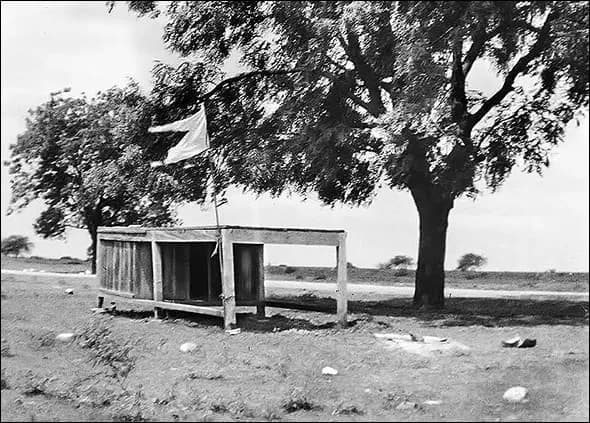
1937 photo by Padri showing Baba's Table House and the Dhuni pit (seen between the viewer and the tree trunk). (Photo courtesy of the MSI Collection)

Baba lighting the Dhuni on 24 September 1954. (Photo courtesy of MN Publications)

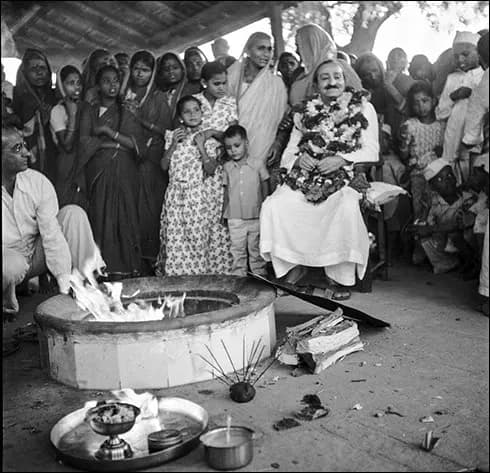
Baba at the Dhuni in September 1954. (Photo courtesy of MN Publications)

Villagers gather around Baba at the Dhuni. (Photo courtesy of MN Publications)